Explore high-performance charging systems designed for electric mobility, material handling, industrial automation, and custom power storage configurations.
Navigating the supply chain requirements, performance parameters, and efficiency metrics for high-capacity 48V charging systems.
Large-scale global buyers prioritize smart charger integration with Battery Management Systems (BMS) via CAN bus (CANopen, J1939). Safety mechanisms, including over-voltage, over-temperature, and short-circuit protection, are mandatory for high-density lithium configurations.
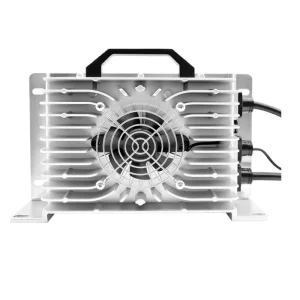
Procurement teams demand robust reliability validation, such as Highly Accelerated Life Testing (HALT) and automated burn-in protocols. Standard parameters include >92% efficiency ratings and high-grade aluminum housings for passive heat dissipation.
A critical barrier to entry in Western markets is comprehensive regulatory compliance. Chargers must possess certifications like UL1564, CE (LVD & EMC), FCC, RoHS, and KC/PSE marks depending on destination markets.
The technological convergence driving innovation in 48V power delivery architectures.
The global shift toward the 48V architecture is accelerated by the demand for higher power transmission in smaller form factors. Traditionally, 12V grids governed auxiliary automotive and industrial systems. However, powering heavy-duty auxiliary loads, high-torque industrial motors, and advanced micro-mobility platforms requires a move to 48V systems. This quadruples voltage, decreases current requirements, enables smaller wire cross-sections, and reduces system thermal losses.
Leading manufacturers are incorporating Gallium Nitride (GaN) and Silicon Carbide (SiC) semiconductor switches to replace traditional silicon MOSFETs. GaN-based chargers operate at significantly higher switching frequencies, which reduces the required footprint of magnetic components (inductors and transformers) while boosting efficiency beyond 95%. The development timeline shows a transition from simple analog charging curves to adaptive, AI-driven digital control loop algorithms that dynamically adjust charging profiles based on real-time cell impedance, temperature, and cycle counts.
| Feature/Technology | Legacy 48V Chargers | Next-Gen GaN 48V Systems | Future Solid-State Ready Chargers |
|---|---|---|---|
| Power Density | 0.5 W / cm³ | 1.8 - 2.5 W / cm³ | > 4.0 W / cm³ |
| Thermal Management | Heavy aluminum heat sinks + fans | High-thermal potting compound | Passive graphene-cooled compact structures |
| Efficiency Rate | 85% - 88% | 92% - 96% | > 98.2% |
| Control Interface | Analog CC/CV loop | MCU-driven digital control (CAN 2.0B) | Cloud-integrated predictive IoT controllers |
An authoritative assessment of the global industry leaders spearheading the design and mass production of advanced 48V charging systems.
Headquarters: Guangdong, China
Key Focus: Heavy Industrial, Automotive, Marine, Golf Cart, and Micro-Mobility Chargers.
Guangdong Hyper Charger Co., Ltd. stands out as an elite global provider of custom high-capacity charging technology. With a massive 20,000 square meter factory, 15 years of R&D expertise, and over 1,000 production models, they dominate the high-efficiency, multi-chemistry charger market (supporting lithium, LiFePO4, and lead-acid).
Headquarters: Taipei, Taiwan
Key Focus: Industrial Forklifts, AGVs, and Telecom Power Systems.
Delta is renowned for high-frequency resonant charger topology. Their 48V product line features up to 96% efficiency ratings, digital CAN communication interface, and compliance with the most rigorous European safety directives.
Headquarters: Bologna, Italy
Key Focus: High-frequency industrial and on-board traction chargers.
An industry pioneer in smart battery diagnostic charging curves, SPE produces high-power density on-board chargers optimized for tough commercial environments.
Headquarters: Nebraska, USA
Key Focus: Golf Cart Chargers, Industrial Utility Vehicles.
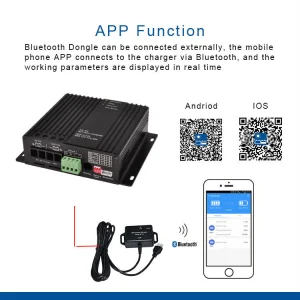
Lester Electrical's Summit II series is a leading name in smart multi-voltage charging, offering Bluetooth connectivity and cloud-integrated diagnostics.
Headquarters: Pettenbach, Austria
Key Focus: Automated Guided Vehicles (AGV), Intralogistics Chargers.
Fronius features the "Selectiva" series, showcasing intelligent Ri-charging processes that minimize heat generation and prolong battery lifecycle.
Headquarters: Dongguan, China
Key Focus: Custom power adapters, e-bike/scooter battery chargers.
Known for highly certified mid-range consumer/commercial chargers ranging from 100W to 1000W, featuring international CB, UL, GS, and CE approvals.
Headquarters: Guangzhou, China
Key Focus: Waterproof Golf Cart and Material Handling Battery Chargers.
Focuses heavily on fully potted IP67-rated chargers that withstand dust, vibration, and water immersion in harsh construction environments.
Headquarters: Shenzhen, China
Key Focus: Industrial Rectifiers, Renewable Energy Storage Systems.
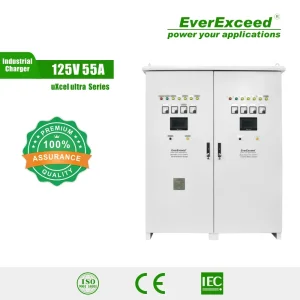
EverExceed manufactures heavy-duty power electronics, incorporating modular N+1 redundancy architectures for uninterruptible utility infrastructure.
Headquarters: New Taipei City, Taiwan
Key Focus: Standardized Power Supplies & Enclosed Battery Chargers.
Mean Well provides highly standardized, cost-efficient 48V power supply units and programmable battery chargers (NPB/NPP series) with global distribution channels.
Headquarters: Brilon, Germany
Key Focus: High-Capacity Traction Charging Systems.
IEB is famous for its proprietary "Filon" charging series, utilizing dynamic charge control logic to maximize fleet operations and reduce utility load charges.
Guangdong Hyper Charger Co., Ltd. is a professional manufacturer specializing in the research, development, and production of battery chargers. With nearly 15 years of industry experience, we have established a strong reputation for delivering reliable, efficient, and innovative charging solutions to customers worldwide.
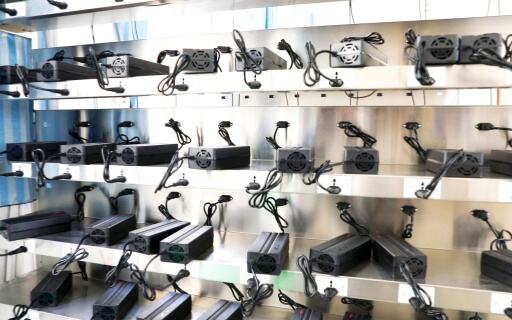
Our company operates a modern production facility covering more than 20,000 square meters, supported by an experienced R&D team and a skilled technical workforce. We offer a diverse portfolio of over 1,000 charger models, designed to meet a wide range of applications.
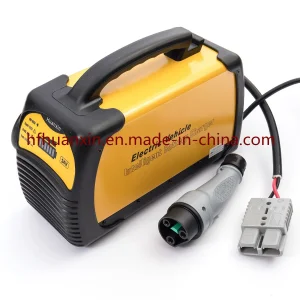
We provide comprehensive charging solutions for both lead-acid batteries and lithium batteries. Our products are widely used in automotive, motorcycles, recreational vehicles (RVs), golf carts, forklifts, cleaning equipment, agricultural machinery, and various industrial tools.
At Guangdong Hyper Charger Co., Ltd., quality is at the core of everything we do. We implement strict production processes along with a comprehensive quality control system. Each product undergoes three rigorous inspection procedures during manufacturing, and every batch is subjected to aging tests before shipment. This ensures long-term stability, safety, and consistent performance, guaranteeing that all delivered products meet high-quality standards.
Our production process is highly standardized and automated. From PCB soldering to final assembly, all stages are completed using advanced high-precision equipment and premium electronic components. This not only improves production efficiency but also ensures consistency and reliability across large-volume orders.
We pride ourselves on our strong technical expertise and professionalism. Equipped with multiple high-precision devices, our dedicated R&D and production teams continuously innovate and optimize our products. This enables us to quickly respond to market demands and deliver efficient, reliable, and customized charging solutions.
Beyond our standard product range, we offer flexible OEM and ODM customization services. Whether you require specific product designs, customized appearances, or tailored technical parameters, we can develop solutions based on your exact requirements.
We continuously invest in advanced technology, process optimization, and talent development to stay at the forefront of the industry. If you are looking for a reliable charger manufacturer or have specific customization needs, Guangdong Hyper Charger Co., Ltd. is your trusted partner. We look forward to building long-term cooperation and providing you with high-quality, customized charging solutions.

Navigating global grid specifications, regional safety guidelines, and environment-specific standards.
Global operations require universal AC input voltages (85V–264V AC) with active Power Factor Correction (PFC > 0.99) to optimize input currents and minimize power losses across North American, European, and Asian grids.
Lithium chemistry requires dynamic monitoring of ambient and module temperatures. System safeguards must override normal cycles to throttle currents, preventing cells from reaching hazardous thermal thresholds.
For demanding environments (e.g., marine docks, agricultural fields, mining, golf courses), outdoor chargers require complete silicone encapsulation to guard internal electronics against moisture, dust, salt-spray, and mechanical impacts.
Expert technical answers to key questions about sourcing and deploying 48V battery chargers.
Discover custom high-frequency rectification units, modular DC-to-DC converters, and multi-stage battery maintainers.
 Hyper Charger