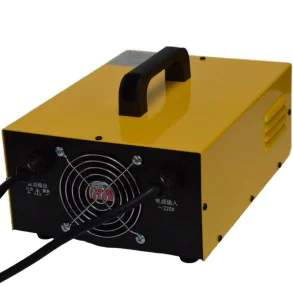
Engineered to deliver optimal conversion rates, reliable thermal dissipation, and broad chemistry support.
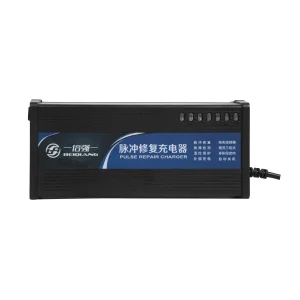
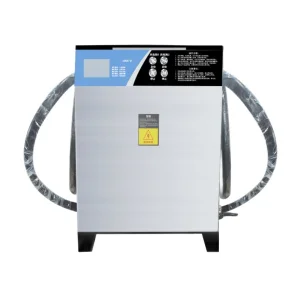
Industrial electrification relies heavily on standardized, ultra-reliable DC charging systems. In commercial environments, 24V architecture forms the backbone of operations ranging from automated guided vehicles (AGVs) in logistics warehouses to complex deep-cycle marine electrical systems and power wheelchairs. When sourcing CE certified 24V chargers globally, procurement officers and engineering leads look beyond basic specifications. They require solutions that offer compliance safety, high power efficiency, thermal resilience, and compatibility with various battery chemistries such as Lithium Iron Phosphate (LiFePO4), standard Lithium-ion, and traditional Lead-Acid variations (AGM, Gel, flooded).
Operating a fleet of forklift trucks, heavy utility machinery, or marine vessels requires chargers that integrate seamlessly into existing management setups. This includes features like CAN-bus telemetry, advanced multi-stage charge algorithms (CC, CV, float), and dynamic thermal regulation. Finding a factory that meets these specifications is key to maximizing battery life and ensuring site safety.
Guangdong Hyper Charger Co., Ltd. is a dedicated manufacturer specializing in the research, design, and production of high-performance battery chargers. With nearly 15 years of industry experience, we have established a reputation for delivering reliable, efficient, and innovative charging solutions to clients worldwide.
Operating from a 20,000 square meter production facility equipped with high-speed automated SMT lines, advanced wave soldering setups, and computerized testing stations, our team delivers high output with consistent quality. Our product range includes over 1,000 standardized and customizable models, providing charging solutions for lead-acid and lithium battery systems alike.
Quality is a core priority at Guangdong Hyper Charger. Each unit passes through three testing checkpoints during manufacturing: component testing, in-process calibration, and final inspection. Every batch undergoes full-load high-temperature aging tests before packaging, ensuring long-term reliability and reducing on-site failure rates.
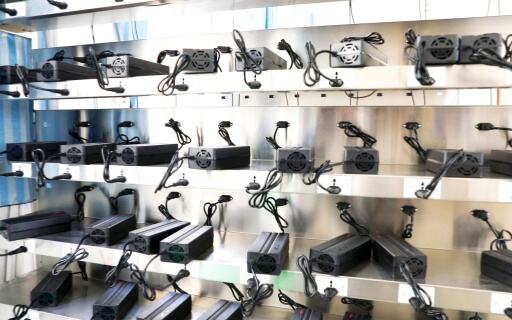
From European warehousing hubs implementing strict safety regulations to North American marine operators requiring corrosion protection, electrical equipment needs vary across regions. The global demand for 24V charging hardware focuses on several core performance areas:
Modern fulfillment centers rely on AGVs and AMRs that run continuously. These fleets require fast-charging, opportunity-charging profiles, and system communication through CAN-bus networks to coordinate with automated systems and minimize idle time.
Marine chargers face challenges from high humidity, salt spray, and vibration. This sector requires waterproof options rated at IP65 or IP67, featuring marine-grade potting and corrosion-resistant components for onboard marine platforms and auxiliary systems.
Electric scooters and wheelchairs require compact, reliable charging options. Our fanless, convection-cooled designs provide quiet operation and feature built-in safety controls like reverse polarity protection and overvoltage protection.
Our engineering team can adjust output parameters, cooling options, communication protocols, and casing shapes to match your requirements.
Battery technology is shifting from high-maintenance lead-acid packs to high-energy-density chemistries like Lithium Iron Phosphate (LiFePO4) and Lithium Titanate (LTO). In response, charger designs are evolving to provide higher efficiency, wider voltage inputs, and smart grid capabilities.
Replacing traditional silicon parts with Gallium Nitride (GaN) semiconductors reduces overall charger size while maintaining high conversion efficiency.
Adding Bluetooth and Wi-Fi capability allows users to monitor real-time charging status and battery health metrics remotely.
Advanced DSP algorithms recognize battery chemistry variations and adjust charge rates to optimize battery lifespan.
Active Power Factor Correction (PFC) circuitry reduces harmonics, lowering overall energy usage in high-volume industrial setups.
International distribution requires strict adherence to safety standards. Our 24V chargers carry CE, UL, and TUV certifications, indicating compliance with essential directives including the Low Voltage Directive (LVD) 2014/35/EU and the Electromagnetic Compatibility (EMC) Directive 2014/30/EU. These certifications ensure our products operate safely under various conditions and integrate reliably into larger industrial systems.

To maintain high standards, our facility utilizes specialized diagnostic equipment during production:
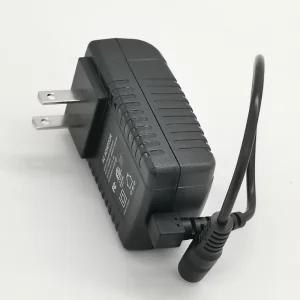
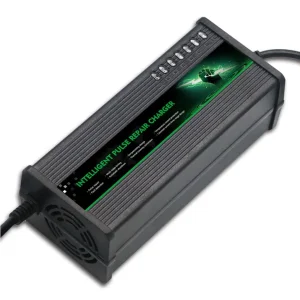
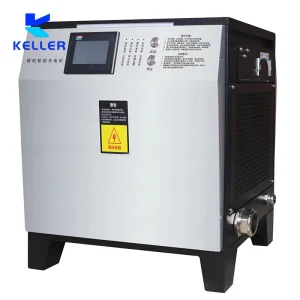
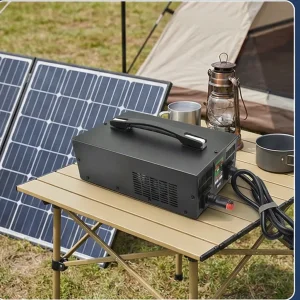
Industrial-grade power adapters and high-amp chargers for material handling and recreational fleets.
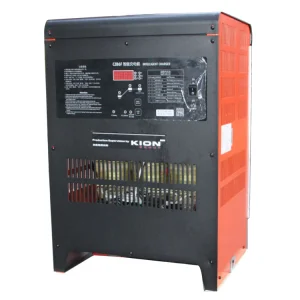
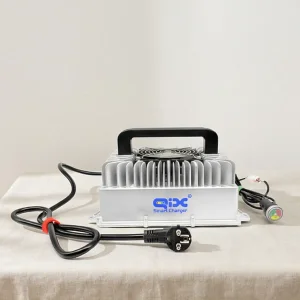
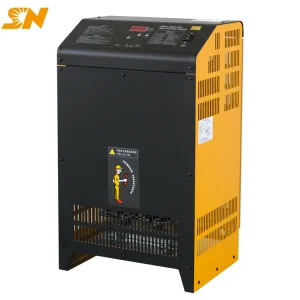
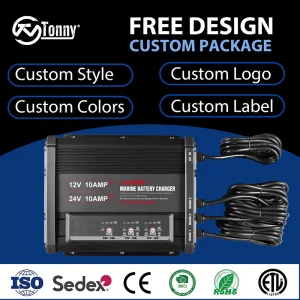
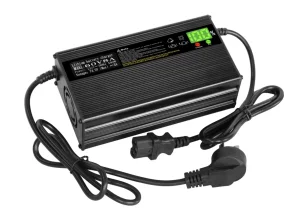
Our chargers come with automatic protection circuits, including over-voltage protection, over-current protection, short-circuit protection, reverse polarity protection, and over-temperature shutoff. Many models also include an ignition-protected design for marine installations.
Yes. Many of our models support dual-profile charging. The charging algorithm can be adjusted via onboard switches or software to match the voltage parameters of either Lithium-ion (NMC/LiFePO4) or Lead-Acid (AGM, Gel, Wet cell) systems.
CE certification confirms that the equipment complies with European safety, health, and environmental standards. It ensures that the charger meets EMC regulations for low electromagnetic interference and standard electrical insulation limits.
We provide OEM and ODM services. This includes configuring custom housing designs, mounting orientations, specialized connector plugs (like SB50, XLR, or aviation plugs), and tailoring charge curves to match specific battery specifications.
Our quality control process includes functional testing on the assembly line, followed by a full aging test at maximum rated load. This process checks thermal performance and electrical stability to ensure reliability before shipment.
For custom ODM modifications, engineering validation and prototype samples are typically completed within 14-21 days. Mass production lead times vary between 25 and 35 days, depending on components and batch volume.
 Hyper Charger