Lithium batteries store substantial energy in a compact package, so charging conditions matter. A healthy battery may feel slightly warm during charging, but it should not become painfully hot. Swelling, hissing, leaking, or a sharp chemical smell deserves immediate attention. Stop using the battery.
What are the signs of an overcharged lithium battery? Common warning signs include unusual heat, rapid capacity loss, repeated charger cutoffs, and a battery case that no longer sits flat. Some devices show a sudden percentage jump, then shut down unexpectedly. A charger may also remain active long after normal charging should finish. These symptoms can indicate cell imbalance, charger failure, damaged wiring, or a weakened battery-management system. One sign alone does not prove overcharging, which is an important limitation.
Look closely. A raised phone screen, a warped power-bank shell, or discoloration near the charging port can reveal internal pressure or heat damage. Field technicians generally recommend using the original, correctly rated charger and inspecting cables for cuts or loose connectors. Do not crush, puncture, open, or continue charging a swollen battery. If it feels dangerously hot, smoke appears, or the smell becomes strong, move away and contact qualified emergency or battery-recycling professionals. Never place a damaged lithium battery in household waste. Manufacturer instructions remain the most reliable reference, although they may not explain every failure pattern. Careful observation can prevent a small charging problem from becoming a serious thermal event.
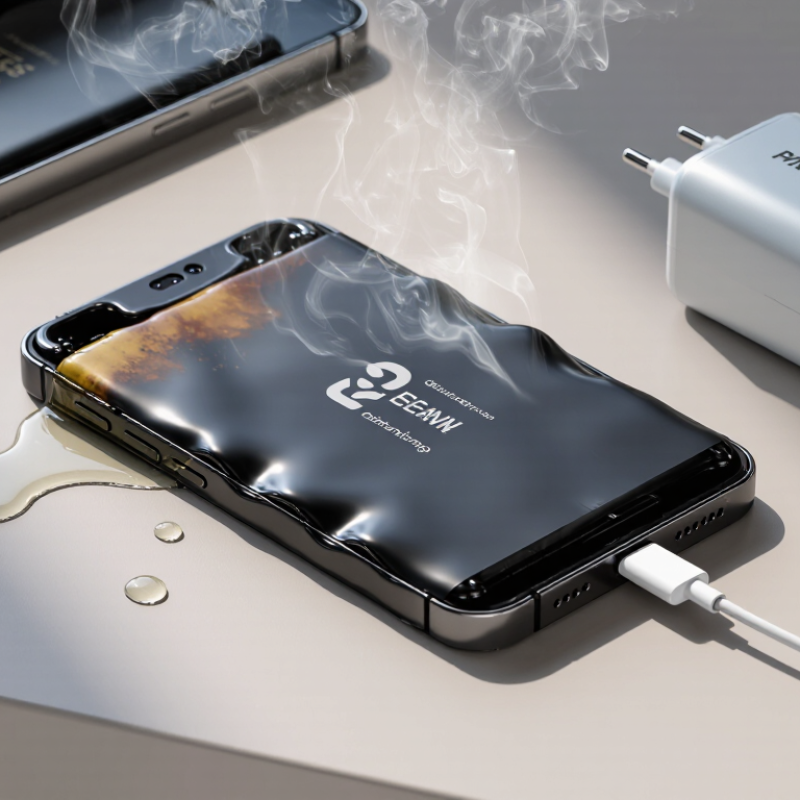
Lithium battery overcharging occurs when charging continues beyond the cell’s safe voltage limit. It is not simply “charging too long.” A faulty charger, damaged battery-management system, poor cell balance, or excessive heat can cause it. Internal reactions may produce gas, lithium plating, and rising pressure. The casing can swell. The battery may also become unusually hot, smell sweet or metallic, hiss, or lose power quickly.
Pay attention early. Very early.
The International Energy Agency reported over 750 GWh of global electric-vehicle battery demand in 2023. That scale increases the importance of reliable charging controls and trained inspection. UL Research Institutes identifies overcharge as a battery-abuse condition that can damage separators and trigger thermal runaway. The U.S. Fire Administration also warns that damaged lithium-ion batteries may reignite after the visible fire ends.
A warm battery is not automatically overcharged. Temperature, age, and heavy use can create similar symptoms. That uncertainty matters. If swelling, smoke, leaking, or intense heat appears, stop charging and keep people away. Disconnect power only when it is clearly safe. Do not puncture, compress, open, or place the pack in water. A qualified battery technician should test the charger, voltage profile, cell balance, and protection circuit. A simple visual check can miss internal damage. That is the uncomfortable part.
An overcharged lithium battery may become unusually warm during charging or remain hot afterward. Heat should not be ignored. A swollen case, lifted cover, or distorted cell pouch is another serious warning. You may also notice a sharp chemical odor, faint hissing, crackling, or unexpected charger behavior. Stop charging immediately.
These symptoms do not prove overcharging. They can also indicate internal damage, manufacturing defects, or aging. However, they require the same cautious response. The U.S. Consumer Product Safety Commission reported 208 fire or overheating incidents involving e-bike and e-scooter batteries between 2017 and November 2022. Those incidents caused 19 deaths. This data shows why early observation matters.
Keep the device away from paper, fabrics, and direct sunlight. If it is safe, disconnect the charger without touching a swollen or leaking battery. Do not press, puncture, freeze, or place the battery in water. A battery that smokes, vents, or rapidly expands needs immediate evacuation and emergency assistance. Never reuse it.
In practical inspections, charging temperature is easy to overlook. A slightly warm pack may be normal. A hot pack with an unusual smell is not. Use the charger specified for the battery system, and avoid overnight charging. I once treated “warm” as a vague complaint; that judgment was too casual. Temperature alone cannot diagnose overcharge, but combined warning signs deserve professional testing.
2026 Top Signs of an Overcharged Lithium Battery
Safety Risks Linked to Lithium Battery Overcharging
An overcharged lithium battery may feel unusually warm during charging or rest. Heat that remains after unplugging deserves attention. Watch for swelling, a lifted casing, or a screen that no longer fits correctly. A sharp chemical smell can indicate internal damage. Hissing, smoke, leaking fluid, or sudden popping sounds require immediate distance.
These signs matter because overcharging can create unstable chemical reactions inside the cells. Pressure may build, releasing flammable gas. In severe cases, thermal runaway can cause fire, intense heat, or nearby material ignition. A battery might also charge unusually fast, lose power quickly, or stop responding to its charger. Those symptoms are not always proof of overcharging, but they should not be dismissed.
If the battery is cool and undamaged, unplug the charger and stop using it. Do not puncture, squeeze, open, or place it in water. Move away from a damaged battery, if safe, and keep people away from the area. Contact qualified battery technicians or local emergency services when smoke, flames, or strong odor appear. Never carry a hot or swollen battery in a bag or vehicle. I used to think charging faults were mainly equipment problems. That view is incomplete. A compatible charger cannot remove every risk from a damaged cell, poor ventilation, or unattended charging. Inspect the battery, cable, and charging surface regularly. Safety depends on the whole setup.
| Warning Sign | What You May Observe | Why It May Indicate Overcharging | Potential Safety Risk | Recommended Immediate Action | Risk Level |
|---|---|---|---|---|---|
| Unusual swelling or bulging | The battery, pouch, device case, or battery pack appears expanded, lifted, or distorted. | Overcharging can cause internal chemical reactions and gas generation, which may increase internal pressure. | Internal damage, electrolyte leakage, fire, or thermal runaway. | Stop using and charging the device. Do not press, puncture, bend, or attempt to flatten the battery. Arrange professional handling. | High |
| Excessive heat during charging | The battery or charger becomes unusually hot compared with normal operation, especially while the device is idle. | Excess current, a faulty charger, damaged cells, or a charging-control fault may be producing abnormal heat. | Accelerated battery degradation, burns, fire, or thermal runaway. | Disconnect power if it is safe to do so. Move people away and allow the device to cool in a clear, nonflammable area. Do not cover it. | High |
| Charging takes much longer than normal | The battery remains connected for an unusually long time or does not reach its expected charge level. | Cell imbalance, increased internal resistance, battery damage, or a malfunctioning charging system can disrupt normal charging. | Overheating, reduced capacity, or further cell damage. | Stop charging and inspect the cable, adapter, and battery for damage. Have the battery and charging system evaluated by a qualified technician. | Medium |
| Rapid loss of charge after charging | The battery reaches a high indicated charge but discharges unusually quickly during ordinary use. | Overcharging may permanently damage the cell chemistry and reduce usable capacity. | Unpredictable operation, voltage instability, and increased heat generation. | Avoid repeated charging cycles and high-load use. Replace the damaged battery through an authorized or qualified service channel. | Medium |
| Unexpected shutdowns or erratic performance | The device turns off, restarts, shows an incorrect charge level, or behaves inconsistently after charging. | Overcharging can impair cell balance, protection circuitry, or battery-management measurements. | Loss of power during use, overheating, or failure of protective controls. | Discontinue use if the behavior is accompanied by heat, odor, swelling, or noise. Do not rely on the battery for critical equipment. | Medium |
| Hissing, popping, or crackling sounds | Unusual noises are heard from the battery or device during charging or shortly afterward. | Gas release, internal short-circuiting, or rapid chemical reactions may be occurring. | Venting, ignition, explosion-like rupture, or thermal runaway. | Keep away from the device and evacuate the immediate area if the sound continues or intensifies. Contact emergency services if smoke or fire appears. | High |
| Sweet, solvent-like, or chemical odor | A new or unusual smell comes from the battery, charger, or device. | A damaged cell may be releasing electrolyte vapor or decomposition products. | Exposure to irritating vapors, fire, or internal short-circuiting. | Stop using and charging the device. Avoid inhaling vapors, do not touch leaking material, and seek professional or emergency assistance as appropriate. | High |
| Smoke, vapor, sparks, or flame | Visible smoke, vapor, sparks, or flames emerge from the battery or device. | These are signs of severe battery failure and possible thermal runaway, which can spread rapidly from cell to cell. | Rapid fire development, toxic smoke, burns, and property damage. | Evacuate the area and call emergency services. Do not handle, move, or open a smoking or burning battery unless directed by trained responders. | Critical |
| Charger or cable becomes damaged | Frayed insulation, bent connectors, exposed conductors, melted plastic, or burn marks are visible. | Electrical faults can deliver abnormal current or bypass intended charging protections. | Short-circuiting, electric shock, overheating, or battery fire. | Unplug the charger when safe. Do not repair damaged lithium-battery charging equipment with tape or improvised parts; replace it with compatible equipment. | High |
| Battery remains warm after charging ends | The battery continues to feel warm or hot well after it has been disconnected and is no longer under load. | Residual internal reactions, leakage current, or cell damage may be continuing after charging. | Delayed overheating, venting, or fire. | Keep the battery away from combustible materials and monitor it from a safe distance. Seek qualified inspection and do not recharge it. | High |
| Safety note: A single symptom does not confirm overcharging, but swelling, smoke, flame, leaking electrolyte, unusual odor, or rapidly increasing heat should be treated as an urgent battery-safety hazard. Never place a damaged lithium battery in household trash or ordinary recycling. | |||||
An overcharged lithium battery may become unusually hot during charging. Its case can swell, crack, or feel tight around the seams. A sharp chemical smell, hissing sound, leaking fluid, or sudden shutdown also deserves immediate attention. Do not rely on appearance alone. Some damaged cells show no visible warning.
Stop charging if the battery becomes hot, swollen, or smells unusual. If it is safe to do so, disconnect the charger and place the battery away from flammable materials. Never puncture, open, press, or cool it with water. Check the battery label and charger specifications together. Their voltage and charging limits must match. A qualified technician should inspect any battery showing physical damage.
Tips: Let the battery cool before checking it. Use a suitable multimeter only if you understand safe testing procedures. Measure the battery terminals without touching both probes carelessly. Compare the reading with the manufacturer’s stated full-charge voltage, not a guess. A reading above that limit may indicate overcharging, a faulty charger, or a damaged protection circuit. Smart monitoring software can help, but it is not perfect. I would treat a strange reading as a warning, not a final diagnosis. Do not continue charging to “see what happens.” During normal charging, keep the battery visible and avoid overnight charging.
An overcharged lithium battery may feel unusually hot, swell, smell sweet or metallic, hiss, or show smoke.
Stop charging immediately if any sign appears.
Do not ignore mild heat.
The U.S. Fire Administration lists abnormal heat, odor, shape changes, and unusual sounds as key warning signs. The FAA’s 2024 incident data also recorded more than 70 lithium-battery events in aviation, showing how quickly a small cell can become a serious hazard. These figures do not predict household risk, but they support a cautious response.
If the battery is cool and undamaged, switch off the charger and unplug it from the wall. Do not pull a hot pack from its cable. Keep your hands away from swelling, cracks, leaking liquid, or smoke. Move people and pets outside, close the door if possible, and call emergency services from a safe location. Never puncture, squeeze, freeze, or place a damaged battery in water. Do not carry it outdoors by hand.
A battery that cools down may still be unsafe. Let a qualified battery technician inspect it before reuse. Do not trust a cheap voltage reading alone; surface voltage can look normal after internal damage. I have seen users mistake “not hot now” for “safe again.” That assumption is risky. Record the charging time, temperature, odor, and visible changes for the technician. Keep the damaged unit away from paper, fabric, vehicles, and other batteries until professionals advise disposal.
Watch for unusual heat, swelling, cracked casing, chemical odors, hissing, leaks, smoke, or sudden shutdowns. Some batteries show no visible damage.
Stop charging if heat seems unusual or continues after unplugging. Let it cool naturally, away from flammable materials. Warmth matters.
Disconnect it only if safe. Do not squeeze, puncture, open, or carry it in a bag or vehicle. Keep people away.
No. A suitable charger cannot eliminate risks from damaged cells, poor ventilation, or unattended charging. The whole setup needs inspection.
Compare the battery label with the charger specifications. Voltage and charging limits should match exactly. Do not rely on memory or guesses.
It may show an abnormal reading, but it cannot provide a complete diagnosis. Use one only with proper safety knowledge. Ask a technician when unsure.
Stop charging and move away if safe. Do not touch leaking fluid. Contact qualified technicians or emergency services if smoke or flames appear.
Avoid unattended and overnight charging. Keep the battery visible on a clear, ventilated surface. I once underestimated the charging environment.
No. Fast charging can have other causes, including charger faults or battery damage. Treat it as a warning, not final proof.
Lithium battery overcharging occurs when a battery continues receiving current after reaching its safe voltage limit, often because of a faulty charger, damaged protection circuit, incompatible charging equipment, or improper charging conditions. What are the signs of an overcharged lithium battery? Common warning signs include unusual heat, swelling, bulging, leaking, a sharp chemical odor, hissing sounds, reduced performance, or a battery that charges much faster or slower than normal. In some cases, the device may shut down unexpectedly or show an inaccurate battery level.
Overcharging can increase the risk of internal damage, fire, or the release of hazardous gases. If overcharging is suspected, stop charging immediately, disconnect the battery only if it is safe to do so, and move away from heat or flammable materials. Do not puncture, squeeze, open, or continue using a swollen or damaged battery. Allow it to cool in a safe, well-ventilated location and seek guidance from a qualified battery service professional for inspection, handling, or proper recycling.

Hyper Charger